Garden Galaxies

For the summer quarter, I thought I was going to create embroidered polaroids that explored my relationship to Maple Hills, the rural neighborhood I grew up in and thought I’d never return to. But after two weeks, I was already sick of the whole concept. I was trying to “therapize” my experience and put a neat little bow on it. To be able to say after ten weeks, “Ah! I live in this beautiful place. I am grateful. NEXT PROJECT, PLEASE!” But that’s not how things work, Karen. Duhhhhhhhhhh …. I can see my friend Lisa rolling her eyes at me right now.

Luckily, I quickly saw the error in my approach, and my professor was extremely kind about my change of direction. Over the past year, several of my friends have sent me this Instagram reel. It’s a beautiful and modern interpretation of a Polaroid emulsion lift. You can read more about that process here. Since I had just created a bunch of Polaroids I had no idea what to do with, and I didn’t want to waste them, I started experimenting.

This led me to ask myself a lot of “what if” questions. What if I got super close to that bright orange flower over there? What would these blurry snapshots look like on a cyanotype? What if I just went ahead and made a mess? What if I just let go?

Let me tell you right now, all these what-ifs led to a maze of more questions. And I thought I had gotten myself totally lost. By midterms, I was afraid that I had made more mess than art. But I had to keep moving forward and trust the process. God, I hate saying that. I felt a lot while making these prints. I felt connected to the “flow” in ways I hadn’t felt since early on in my photography practice. Would my classmates and professors see that in the images, though?

I won’t say more, because I want you to judge the images for yourself. Yeah, yeah, cop out. But I fear that if I dive too much further into the process, you won’t experience these images for yourself. And for me, that is really important.

I had to let go of many self-imposed expectations and narratives to create this work. It is incredibly different than anything I have ever created. And I am really looking forward to what “trusting the process” looks like in the future.

Cheers! and Love!
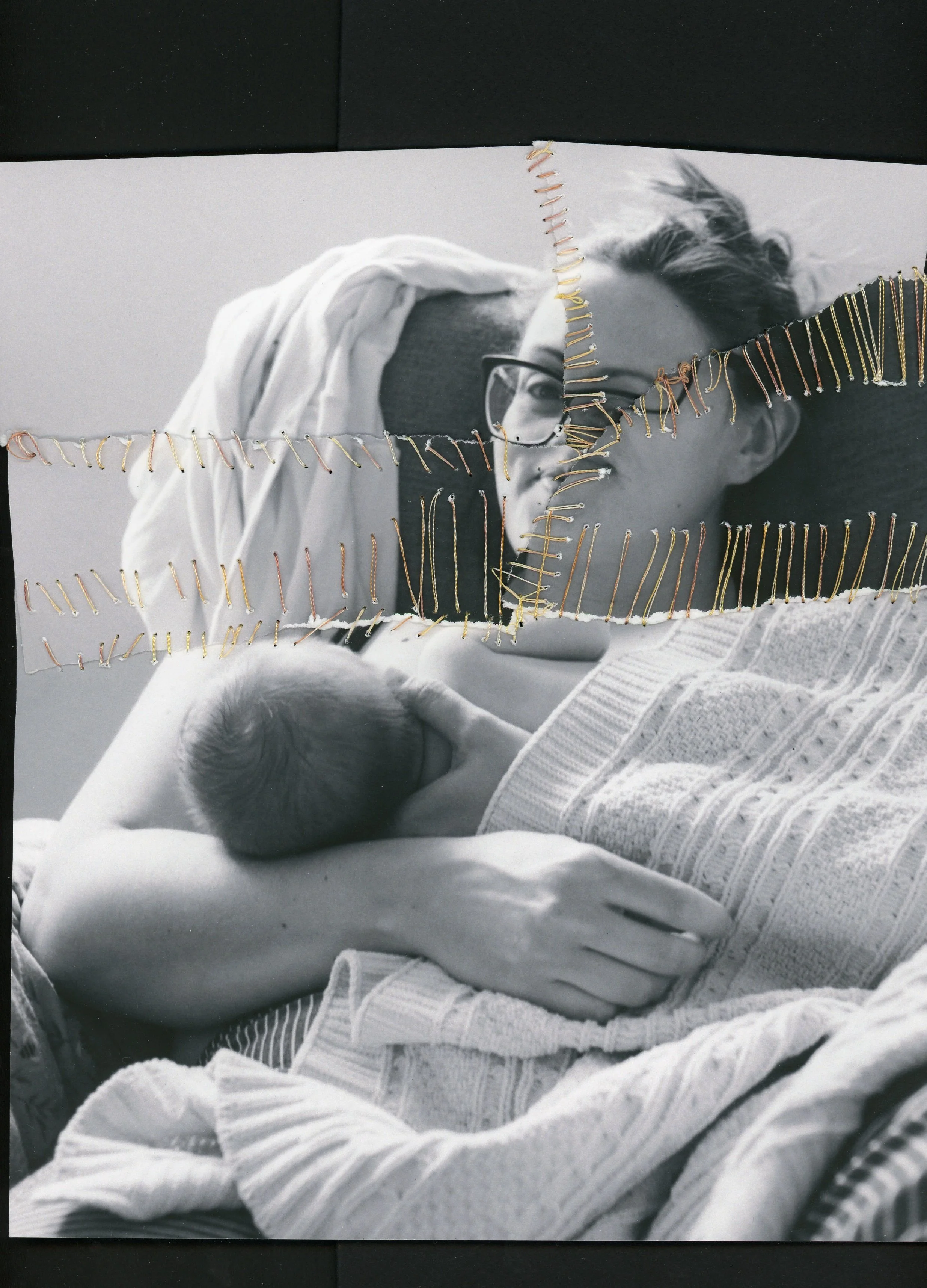
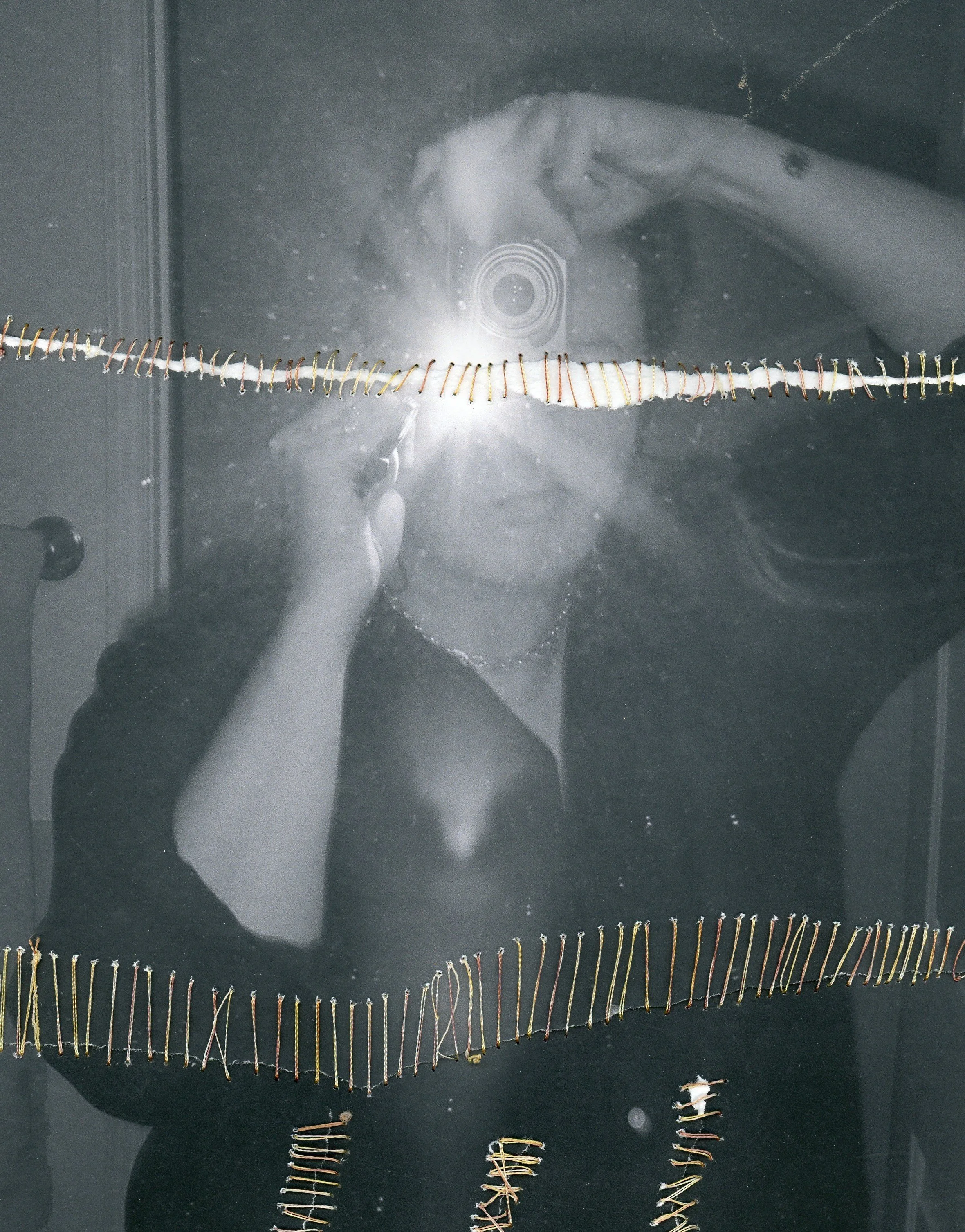
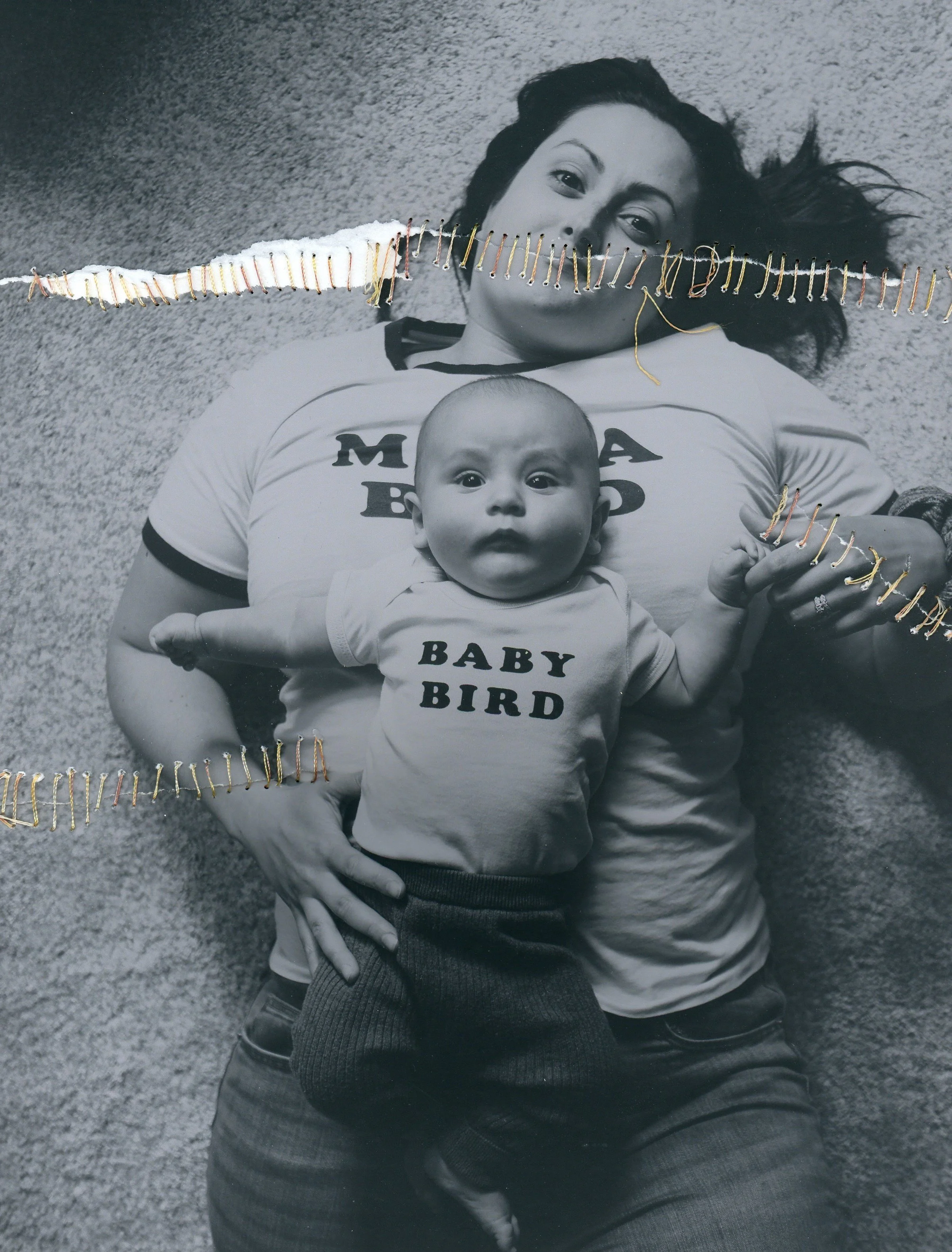
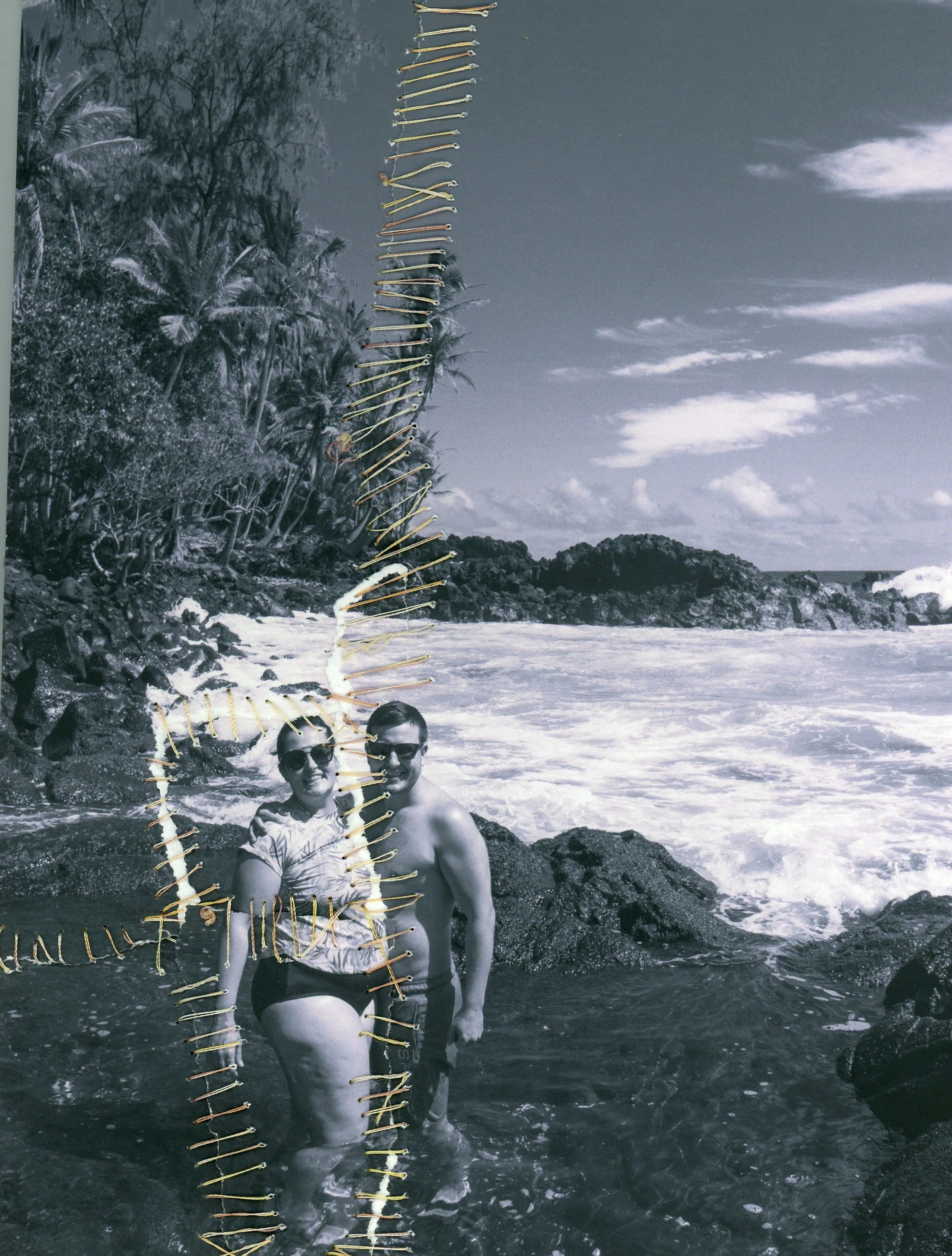
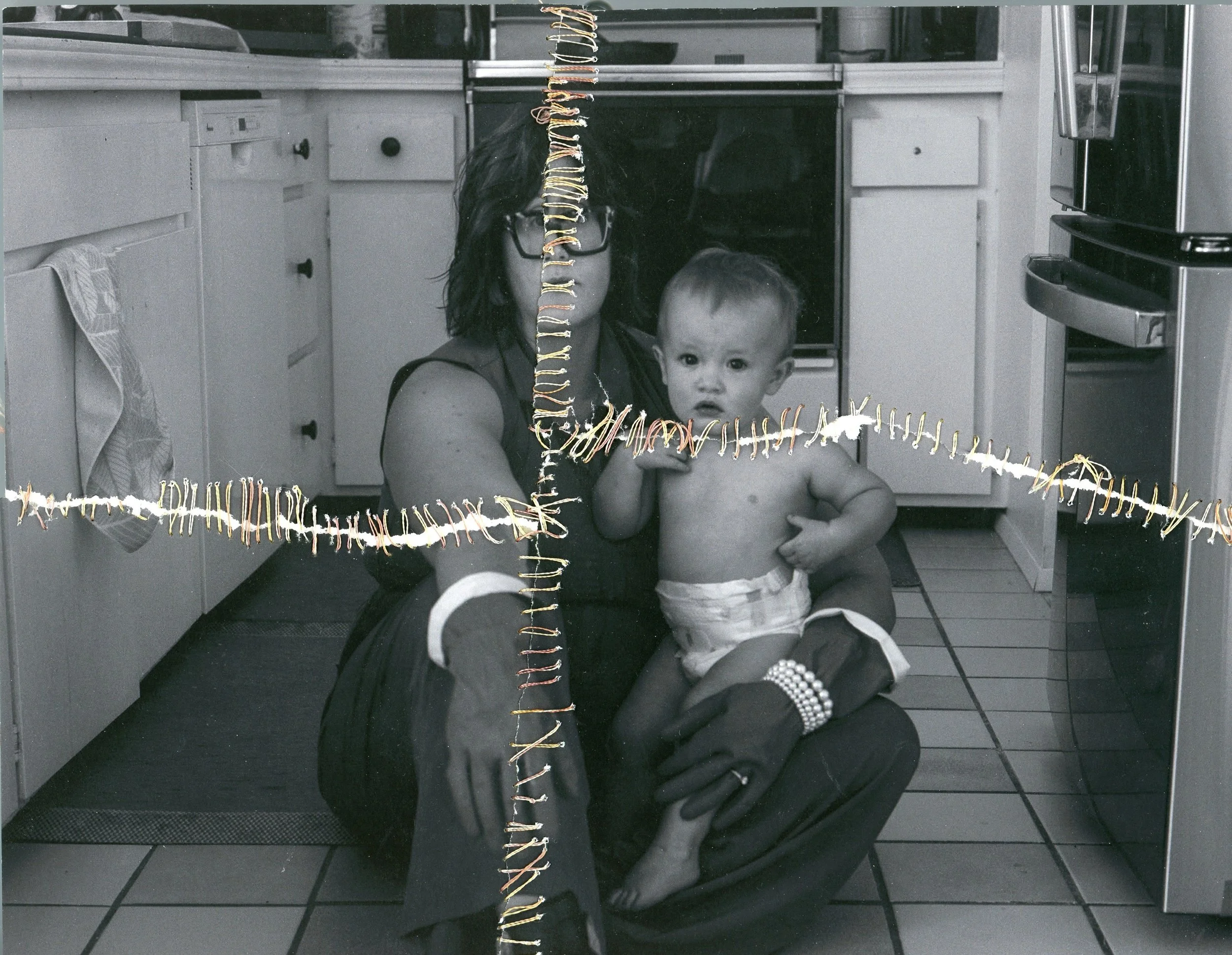
I tore them apart and sewed them back together

This series deals with postpartum depression and thoughts of suicide. If you are struggling, you are not alone. Please reach out to the 988 Suicide and Crisis Lifeline by calling or texting 988.

In the depths of early motherhood, I felt like drowning. I would have been happy to. That’s the scariest part of this whole story. Dying felt easier than living because I felt dead. Everything about me was gone. And in a period of 17 months, I didn’t just have one baby; I had two. The aftermath of such a whirlwind was devastating. The only solace was a needle and thread. I printed out images of myself from those early days and ripped them apart. It felt so good to see what was happening inside me made real. Knowing I had to keep going, both literally and figuratively, I began mending myself back together, in ways that made sense to my depressed soul. My thoughts jumbled, my relationships strained, my voice silent. Everything felt out of control, and yet no one seemed to notice. I just woke up every day and kept being a mom. And oh, that was so painful. Not because I didn’t love my children, but in spite of it.

When it doesn't work out

She told me, “It was a letdown.” Those are the words my professor used to describe the portrait project I had just so painfully tried to present. Oh, what a stab to the heart!

It’s been several months since that moment, and I’m coming to terms with it. She was right, and I knew she was, even in that moment. I think that’s why it hurt so badly. I knew what she meant because I didn’t like the work either. But, grad school being grad school, I had to push forward. I had to make it work.

Let me backtrack a little bit. The work is called M*thership. You can see some of that project on my page, but the work is now just called M*ther. But you won’t see it all, nor will you see the slideshow I created for class. Because it didn’t work out. At least, not in the way I had intended. The original project was to photograph mothers as an other worldly presence. Something almost alien. I wanted to do that because it’s how I feel as a mom sometimes. Like I’ve been dropped onto a totally different planet, and I have this huge responsibility to not only survive, but keep a whole family intact in a world where I have no idea what I’m doing. It’s a large, unfamiliar feeling. And honestly, a major reason why this initial idea didn’t succeed is that I’m still figuring out how I truly feel. On top of that, I was using other mothers with feelings different than my own to try to express this very personal experience.

This was the image that I, at the time, felt captured my original goal.

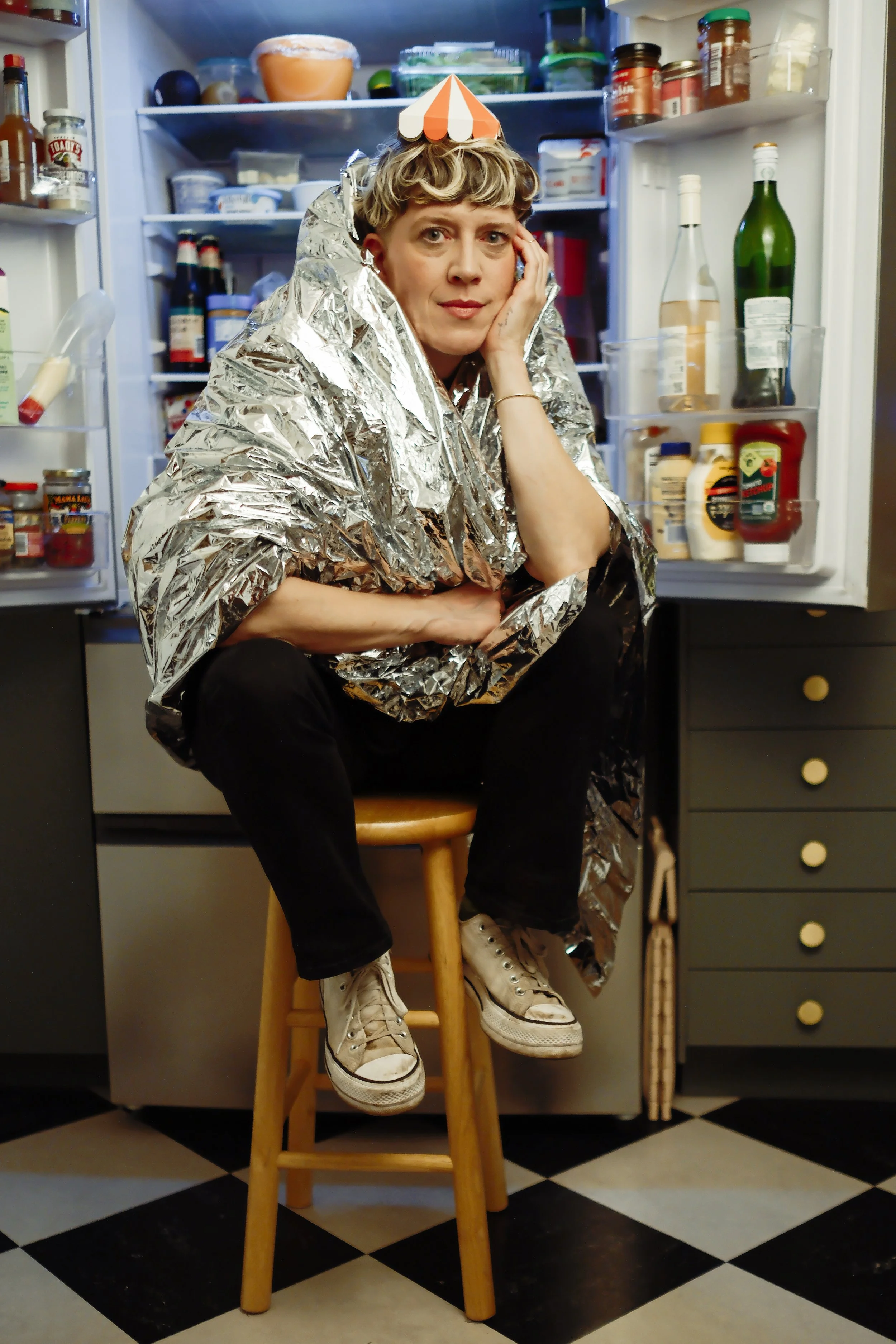
I call this portrait, “Leftovers”

But what didn’t connect with others was the metallic blanket wrapped around my subject. I was trying to imitate literal leftover food being wrapped up in foil, tossed to the back of the fridge, and forgotten. The circus tent hat was added to this image by my friend because she thought it was funny, and I felt it was authentic to her. In the end, my professor and the rest of my class saw it as an emergency blanket and kept asking me, “Where’s the emergency? Is there an emergency?”

With that piece of feedback, I tried again. Wanting the alien side of motherhood to be more clearly understood, I tried to use it more as a symbol of contrast. As in, “here’s a mother doing non-motherly things, but is still a mother, deal with it.”

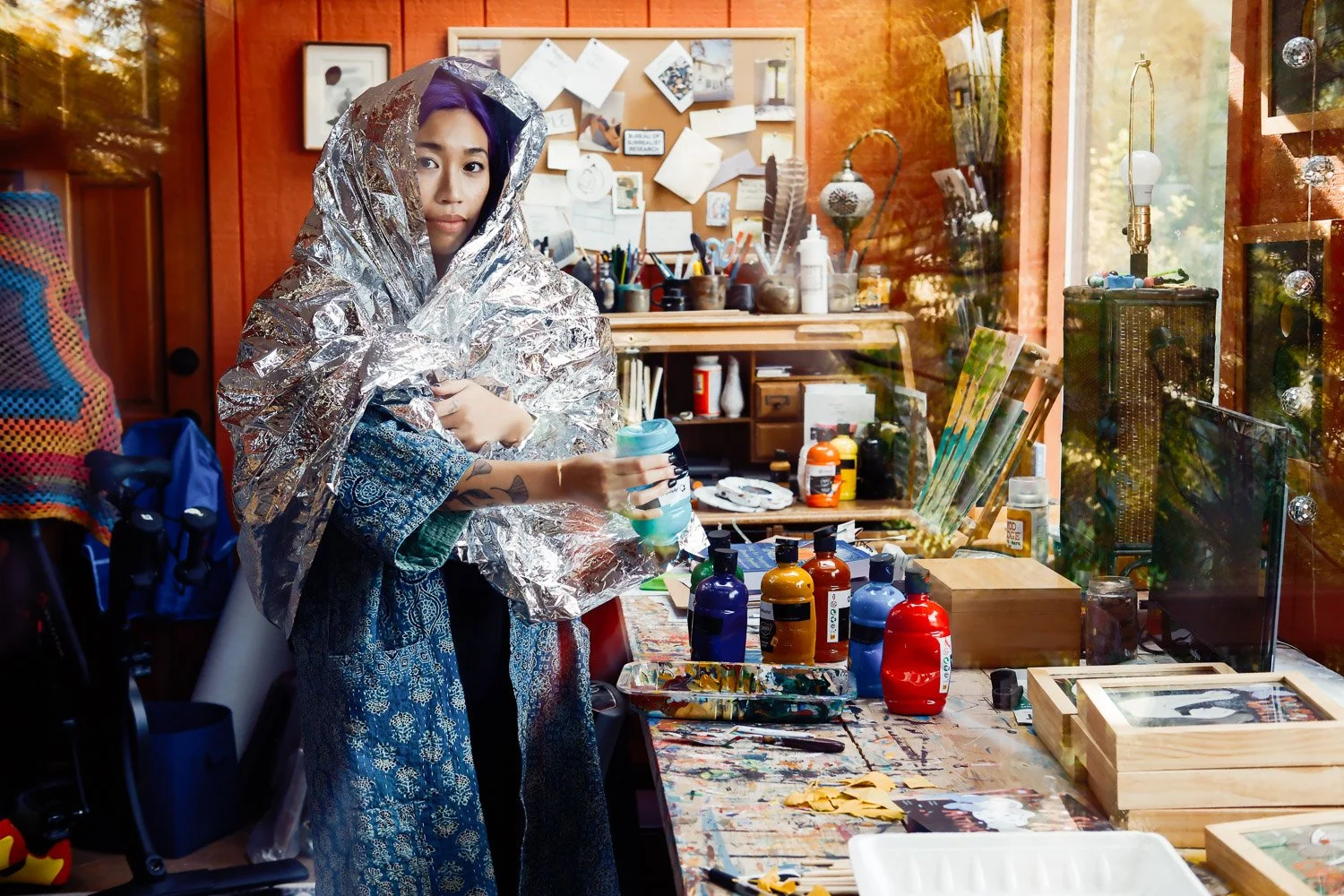
This portrait has been left untitled, at least for now

I love how odd this photo is. I shot it through a sliding glass door, so you can see the trees reflecting back, creating a layered, disorienting image that makes you wonder, what’s going on? But again, the space blanket becomes too distracting. And I gave up on the blanket altogether.

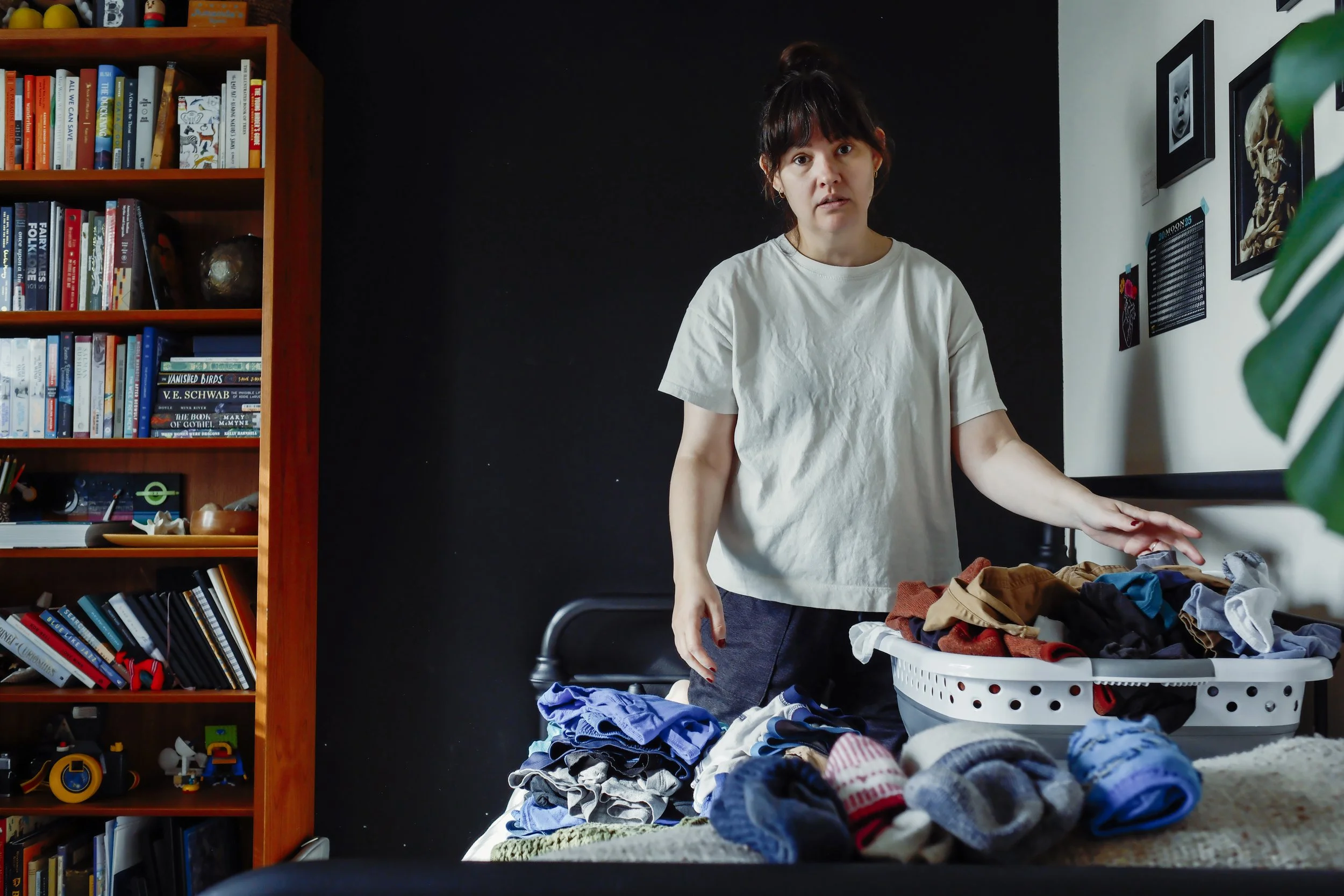
I was so proud of this idea, though. So, I included the “Leftovers” image in the final works of M*ther for my grad school presentation. This is where it starts to make sense that my professor called the project “a letdown”. I went from a very layered and symbolic image to this:

This portrait is called “A woman doing laundry.”

The project totally changed. And yet, I didn’t let go and allow it to change. That’s what killed M*thership.

The original idea was too precious to me. It felt too important to abandon. I wanted the alien idea to work so badly. But it wasn’t the time. It wasn’t the story I could tell—at least, not yet.

I haven’t completely given up on M*thership. But I will carry this painful lesson forward: you can’t force an idea into fruition. All you can do is experiment, listen, and try again when the timing is right.

So, for now, there is M*ther. A series of seriously honest images that pull back the veil on motherhood. It is beautiful sometimes, painfully messy and taxing at others. And yet, we are still here. We still show up.