
Songs We Sing
Songs We Sing
By KK Jordt
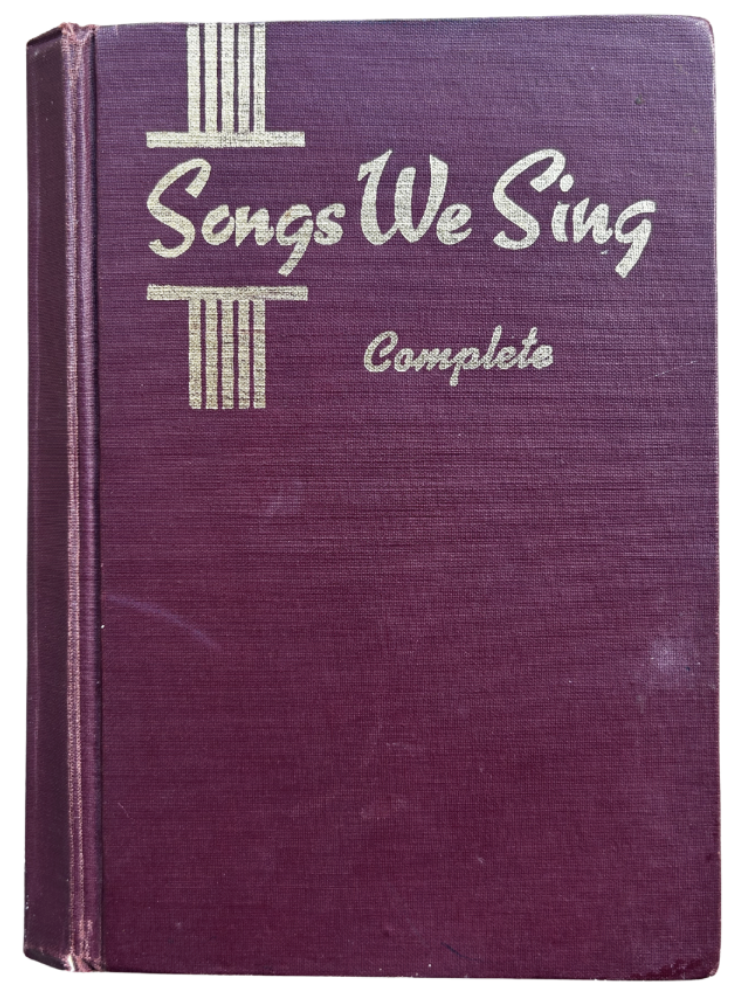
Songs We Sing is a handmade photobook constructed from an old Southern Baptist hymnal. Archival and contemporary photographs of three generations—made within the same neighborhood over sixty years—are paired with altered pages, exploring how faith, memory, and family histories echo and quietly evolve over time.
Published March 2025
7” x 9.25”
30 images, 21 pages
Hardback
1 of 1
Songs We Sing was constructed from an old Southern Baptist hymnal that my family still brings out during holidays to sing around my dad’s piano. The imagery reflects my family across three generations — all photographed within the same neighborhood over the span of sixty years.
Through this photobook, I explore how generations resonate with one another as they subtly shift. The pages were constructed by scanning original hymn sheets alongside archival and contemporary family photographs, compositing them in Photoshop. Each spread was printed on Moab Rag paper, then trimmed from 8.5 x 11 inches down to 7 x 9 inches to echo the scale of the original hymnal.
The book was sewn together and Swiss-bound, meaning the last page is affixed to the back cover while the front exposes the spine.
I did not want the pages to replicate the source material. I wanted the transformation to be visible. Several original hymn sheets are intentionally inserted into the book — songs I have redacted and edited to reflect how I have changed over time relative to past generations.
Faith functions as the vehicle for that change.
The image sequence is not in chronological order. Instead, photographs are arranged in groups of three, where subject matter, location, gesture, or color echo across time. After each grouping, there is a pause. This rhythm creates a lyrical, almost waltz-like pacing — a visual refrain that mirrors the act of singing together.
The hymns embedded throughout either carry sentimental meaning within my family or were selected because their titles resonate with the surrounding imagery.
The book concludes with the title page and artist statement. By placing this context at the end, I invite viewers to first encounter the work without explanation — to question what the book was, why it has shifted, and how the photographs operate within it — and then to reread it with new understanding.